Which Beverly Hills style fits how you live today and where you see yourself in five years? In a market where every property feels one of a kind, it helps to decode what you are seeing before you book tours. In this guide, you will learn the visual cues, floorplan patterns, maintenance needs, and permit considerations behind the styles you will encounter most in Beverly Hills. You will also get a practical framework to narrow your shortlist with confidence. Let’s dive in.
How lots shape the home you choose
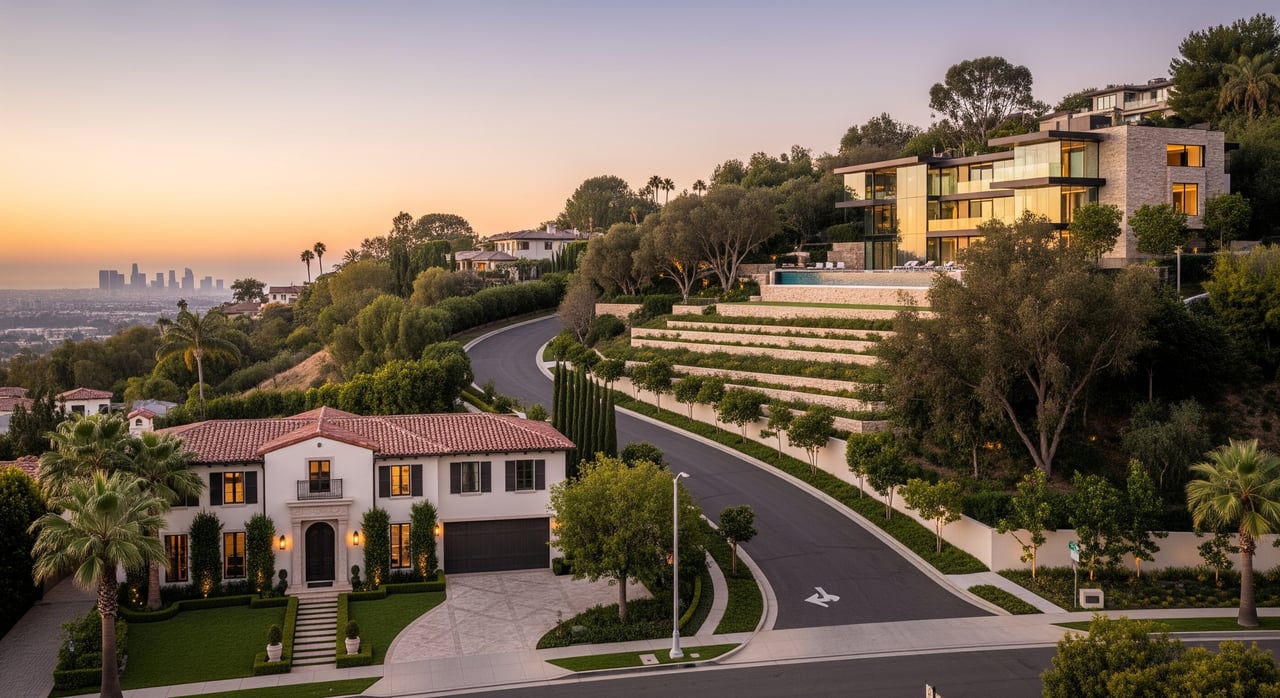
Beverly Hills includes level, walkable streets in the Flats and more varied hillside districts that climb into the Santa Monica Mountains. On flat lots, you often get broader footprints, classic facades, and generous yards. In the hills, you trade some yard for views, privacy, and terraced outdoor spaces.
City oversight matters. The City of Beverly Hills Planning Division reviews building permits, remodels, and new construction, and some projects require discretionary design review. The city also has a Cultural Heritage program for historically significant homes, which can add review steps for changes. Hillside properties may trigger geotechnical, grading, drainage, and fire-safety requirements that affect scope and timing.
The practical takeaway is simple. Style preference should align with lot type, privacy goals, and your tolerance for renovation and review timelines.
The styles you will see
Spanish Revival
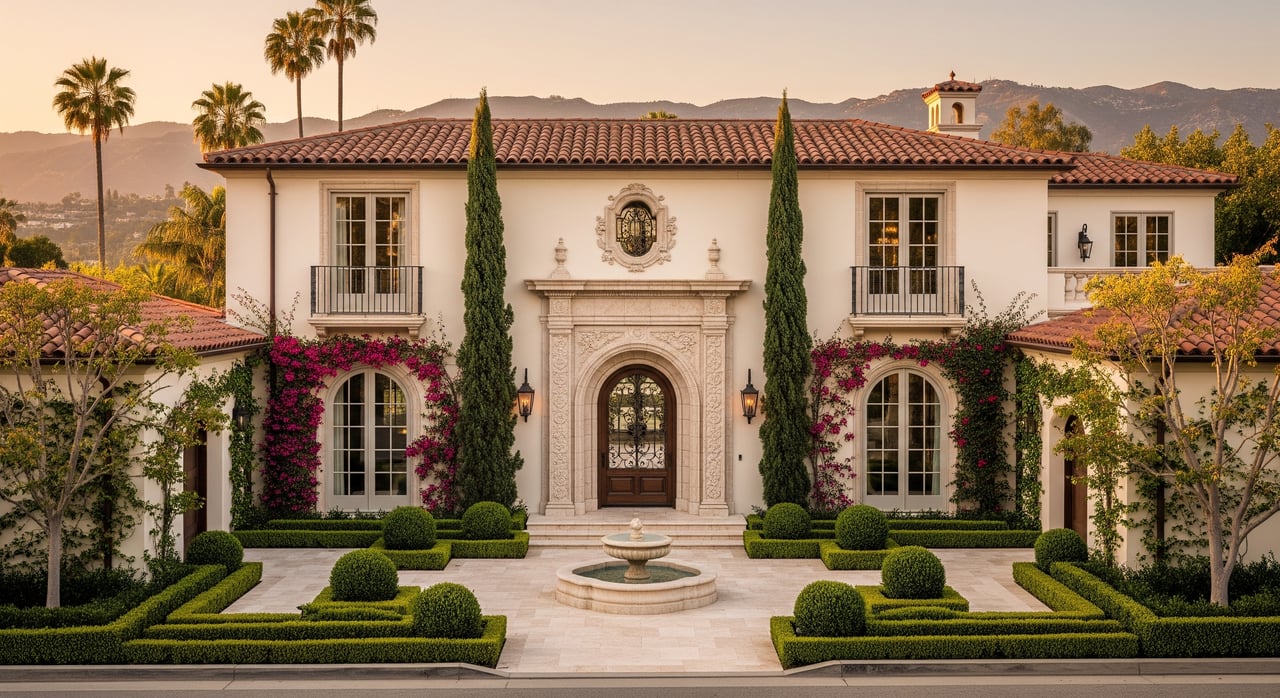
- Visual cues: White or cream stucco, low red-orange clay tile roofs, arches, wrought iron, carved wood doors, asymmetry, and courtyards.
- Floorplan: Rooms often organize around a courtyard or patio. Expect separate formal spaces for living and dining. Many kitchens have been opened up in remodels, but circulation can still feel more segmented than a new open plan.
- Maintenance: Inspect stucco for cracks and moisture, and clay tile roofs for broken tiles or flashing issues. Wood beams and doors can be prone to rot or termites. Courtyard waterproofing and drainage are common retrofit needs.
- Best for: You want classic Southern California character, privacy through courtyards, and formal entertaining. Plan for specialty trades and thoughtful updates if you want a more open flow.
Mediterranean and Italianate estates
- Visual cues: Smooth stucco with more ornament, symmetry in some examples, columns, tall arched windows, balconies, and formal entries. Terracotta roofs and sweeping drives are common on estate sites.
- Floorplan: Grand foyers, formal entertaining rooms, larger service areas, and guest suites. Second-floor bedroom wings often include terraces and wide indoor-outdoor transitions.
- Maintenance: Similar stucco and tile roof care as Spanish Revival. Larger footprints increase costs for roofing, HVAC, seismic work, and specialty landscapes such as stone terraces and water features.
- Best for: You prioritize large-scale entertaining, guest capacity, and estate amenities. Expect higher ongoing landscape and systems maintenance.
Contemporary and Modern
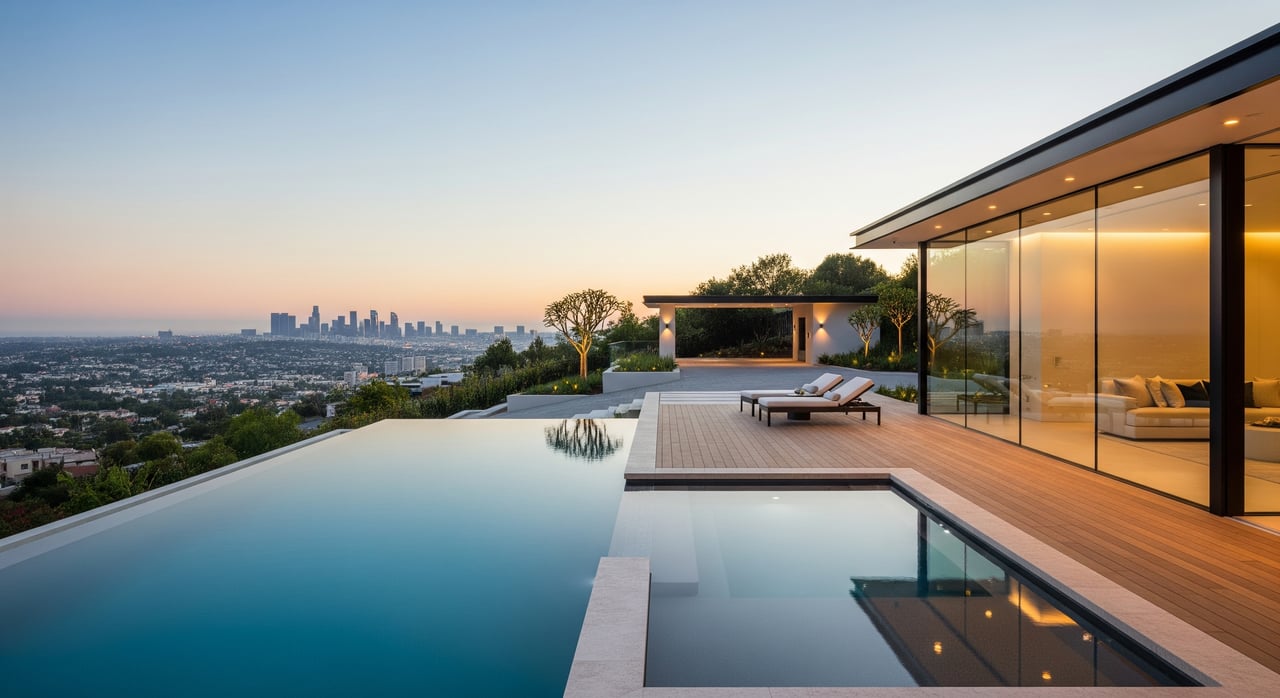
- Visual cues: Clean lines, minimal ornament, flat or low-slope roofs, expansive glass walls, steel and concrete details, and custom metalwork.
- Floorplan: Open great rooms that blend kitchen, dining, and living. Strong connection to views and terraces, with flexible multiuse spaces. You often see subterranean or recessed garages and dedicated media or fitness suites.
- Maintenance: Flat roofs need vigilant waterproofing and membrane checks. Glass, steel, and high-spec systems require specialist service and can be costly to repair. Custom kitchens and stone slabs are expensive to modify.
- Best for: You value open-plan living, light, views, and integrated indoor-outdoor space. Budget for specialist maintenance and replacement costs.
Mid-Century Modern (MCM)
- Visual cues: Low horizontal profiles, broad eaves, clerestory windows, ribbon glazing, post-and-beam construction, and natural wood or stone.
- Floorplan: Open living with zoned bedroom wings, often single-level or split-level ranch forms on flat lots. Many have been expanded to add today’s kitchens and media spaces.
- Maintenance: Original single-pane glass, older sliders, and early HVAC systems are common upgrade targets. Inspect post-and-beam framing for rot or termite activity and plan for structural modernization where needed.
- Best for: You love classic mid-century aesthetics and indoor-outdoor flow, and you are comfortable investing in energy and structural upgrades while preserving character.
Architectural estates and signature-architect homes
- Definition and visual cues: Bespoke residences with unique forms, custom details, and a distinct design intent by notable architects or design teams. Expect tailored materials, rare finishes, and siting that optimizes approach, views, and privacy.
- Floorplan: Highly customized to lifestyle, often with guest houses, staff quarters, multiple garages, screening rooms, wine cellars, and separate formal and informal entertaining zones.
- Maintenance: Systems and finishes can be unique and vendor-specific, requiring specialist contractors. Historic architect homes may involve preservation protocols. Renovations should be carried out with professional design oversight to maintain integrity and value.
- Best for: You seek a one-of-a-kind property and are prepared to maintain a custom home with specialist teams.
Decision framework to narrow your shortlist
Use these factors to compare options quickly:
- Lifestyle and entertaining: Do you prefer formal rooms or open-plan living? How often will you host large gatherings versus intimate dinners?
- Maintenance tolerance: Are you comfortable budgeting for specialty trades, or do you prefer lower-maintenance materials and systems?
- Renovation scope and permit risk: How much change do you want to make? Hillside work, historic reviews, and larger alterations can extend timelines.
- Energy and sustainability goals: Are upgrades to glazing, insulation, and HVAC part of your plan? Mid-century and older stucco homes may need more work to meet modern comfort expectations.
- Privacy and security: Courtyard houses offer private outdoor rooms. Glass-forward homes may rely on landscape design or smart glazing for privacy.
- Resale and marketability: Well-executed modern renovations and signature-architect homes tend to hold broad interest, but taste in the local luxury segment matters.
Quick reference cues while scrolling listings
- Roofs: Clay barrel tiles suggest Spanish or Mediterranean. Low-slope membranes indicate contemporary or modern forms.
- Facades: Smooth or textured stucco aligns with Spanish and Mediterranean. Exposed concrete, large glass, and steel signal contemporary design. Natural wood and stone often read mid-century.
- Windows and doors: Arches and carved wood relate to revival styles. Floor-to-ceiling glass and pocket sliders signal contemporary or mid-century. Multi-pane divided lights are typical of traditional revival homes.
- Plan clues: Central courtyards point to Spanish Revival. Symmetrical wings off a formal foyer suggest Mediterranean estates. Uninterrupted great rooms indicate contemporary design. Single-level flow with clerestories points to mid-century.
- Lifestyle signals: Staff quarters and formal service corridors often indicate older estate planning. Integrated gyms, cinemas, underground garages, and tech rooms often indicate recent builds or major remodels.
What to look for on tours and inspections
Small clues can reveal big costs. Use this checklist during showings and follow up with specialists as needed.
Visual cues to check
- Roof condition: cracked tiles, patched membranes, or ponding on flat roofs
- Stucco and exterior finishes: hairline cracks or efflorescence that point to moisture issues
- Windows and doors: single-pane versus double-pane, seal failure, and smooth operation
- Indoor-outdoor thresholds: drainage, slope away from foundations, and waterproofing at courtyards
- Structural signs: uneven floors, stair separation, and visible foundation cracks
- Mechanical footprints: age and location of HVAC units, boilers, water heaters, and electrical panel capacity
- Pool and landscape: plaster and tile condition, equipment age, irrigation type, and any water supply constraints
- Access and parking: guest turnaround, porte-cochere, garage width and ceiling heights if you plan for lifts
Inspections and professional reviews to order
- General home inspection by a licensed inspector
- Structural or engineering review for hillside sites or any signs of movement
- Roof and drainage specialist, especially for flat or tile roofs
- Pest and drywood termite inspection for older wood framing
- Pool and spa equipment inspection, including chemical systems
- Electrical evaluation for panel capacity and older wiring concerns
- Mechanical and plumbing inspections, including sewer lateral scopes when appropriate
- Preservation architect or experienced design professional for architect-signature or landmark properties
Permits, preservation, and timelines
Before you write an offer, verify the property’s permit history with the City of Beverly Hills. Confirm whether any major alterations, guest houses, or accessory dwelling units were permitted. Unpermitted work can complicate title, financing, and future renovations.
If a home is locally designated or otherwise considered historically significant, expect additional review for exterior changes. For hillside sites, plan for geotechnical reports and explicit approvals for grading, retaining walls, and terraces. Align your desired changes with what is feasible on your lot and within city processes.
Match style to lifestyle
- Spanish Revival: Private courtyards, traditional rooms, and classic detail. Good if you value character and are comfortable with specialty maintenance.
- Mediterranean estate: Formal entertaining, guest capacity, and statement entries. Best if you want an estate presence and accept higher ongoing upkeep.
- Contemporary: Open flow, walls of glass, and tech-forward systems. Ideal if you want light, views, and flexible spaces.
- Mid-century: Single-level ease, indoor-outdoor living, and warm materials. Works well if you plan targeted energy and structural upgrades.
- Architectural estate: One-of-a-kind design and curated materials. Right if you want a signature property and will preserve its intent with expert teams.
A thoughtful match between style, lot, and your daily rhythms is what creates long-term satisfaction. If you want a private, strategic perspective on Beverly Hills inventory, request a discreet conversation with Stephany Chen.
FAQs
What defines Spanish Revival homes in Beverly Hills?
- Stucco walls, red clay tile roofs, arches, courtyards, and detailed wood and ironwork, often with formal rooms organized around an interior patio.
How do Mediterranean estates differ from Spanish Revival?
- Mediterranean estates tend to be larger and more formal, with grand foyers, symmetrical elements, columns, and extensive entertaining and guest spaces.
What should I know about modern flat roofs in Beverly Hills?
- Flat or low-slope roofs rely on membrane systems that require regular inspection and proactive waterproofing to avoid ponding and leaks.
Are mid-century homes energy efficient as purchased?
- Many retain single-pane glass and older HVAC, so buyers often plan upgrades to glazing, insulation, and mechanicals for modern comfort and efficiency.
Do historic designations limit renovations in Beverly Hills?
- They can introduce additional review for exterior changes; verify any designation and discuss your plans with city staff and experienced design professionals.
Which inspections are must-haves for hillside properties?
- A structural or engineering review and geotechnical diligence, along with roof, drainage, and mechanical inspections, help clarify risks and costs before closing.